Kathairos has emerged as the leading North American solution for methane elimination from pneumatics, with more than 2,400 systems in operation across North America and over 70 major oil and gas producer partners.
In this post
To address methane venting from oil and gas facilities, the typical playbook has always been to power equipment with electricity instead of instrument gas. This involves tying into a grid or installing a generator or solar panel array at the facility. For pneumatic venting in particular, producers then need to install instrument air compressors or replace existing devices with electric alternatives. As detailed below, electrification comes with costs and challenges. Luckily, liquid nitrogen systems avoid these pitfalls, acting as a stand-alone battery that provides perfectly-pressurized gas on-demand. No electricity needed.
1. The costs of electrification
Oil and gas facilities are often remote. Getting electricity access at remote facilities can be a big challenge. In many jurisdictions, grids are already operating at near capacity. Increased demands from AI infrastructure buildout are exasperating this problem and pushing electricity costs even higher. Then – even with permits, grid interconnection and right-of-way access secured – there can be considerable costs running a new line to a given facility (both in terms of capital and time).
Producers can forego the grid by installing a modular power source at the site (typically, generators or solar panels). These also come with an upfront capital cost. To address pneumatic venting, further investments are also needed to install electric actuators or instrument air systems at the facility.
Once a site is electrified, there are typically recurring electricity (or fuel) charges. Parts will also need to be maintained or replaced at regular intervals, and batteries and copper wiring may be prone to theft.
2. Power reliability = Facility production = Revenue
Regardless of the capital costs involved with bringing electricity to site, power source can have important implications for operational performance. Production and profit depend on a secure, reliable source of power; a facility is only as good as the grid or generator that runs it.
Some facilities may have less reliable power depending on the condition of the grid, the region’s climate, or any other underlying technical issues. Even a seemingly high uptime of 98% means an average of 6-8 days of downtime and lost production. For large, high-producing sites, this can come at significant cost.
3. Nitrogen: No electricity. No wait. No downtime.
Liquid nitrogen can also be used to power pumps and process controls at a facility, eliminating methane venting. However, unlike electric devices or instrument air packages, nitrogen systems do not require on-site power generation. Instead, the system is powered by the laws of thermodynamics, and the desire for liquified gases to revert to a gas at ambient temperatures.
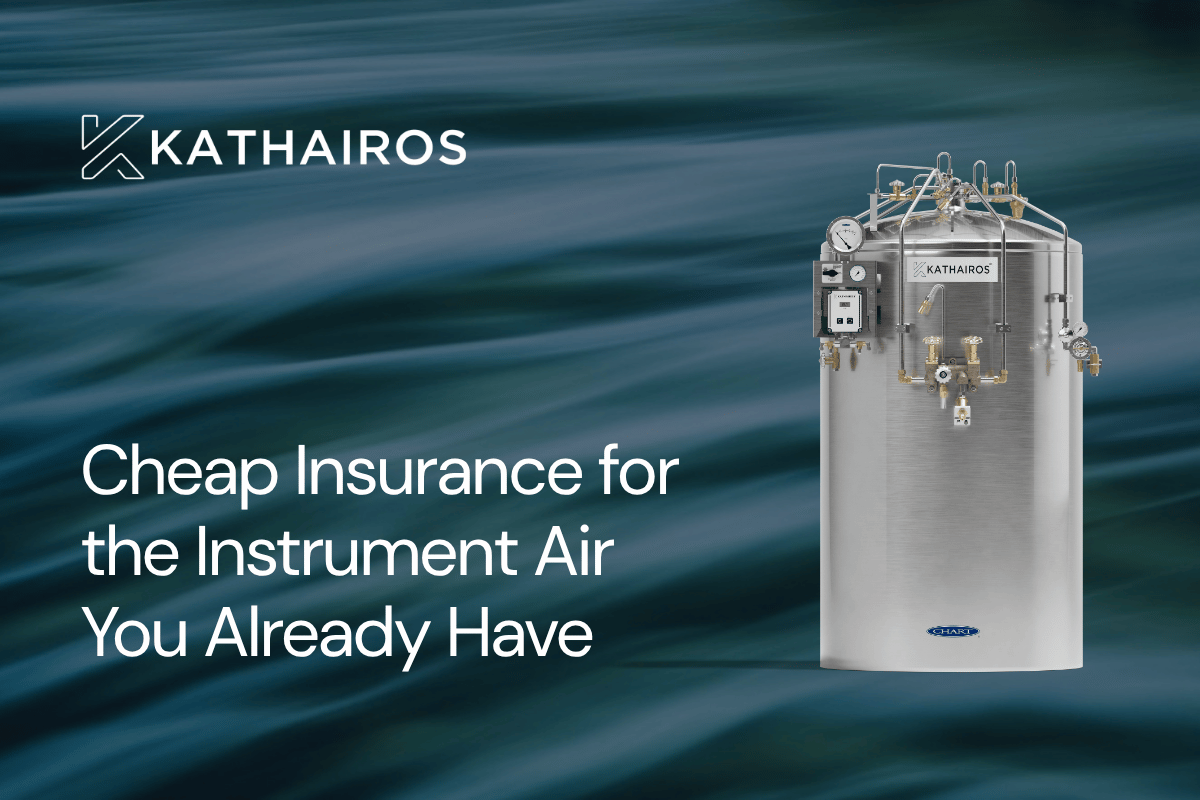
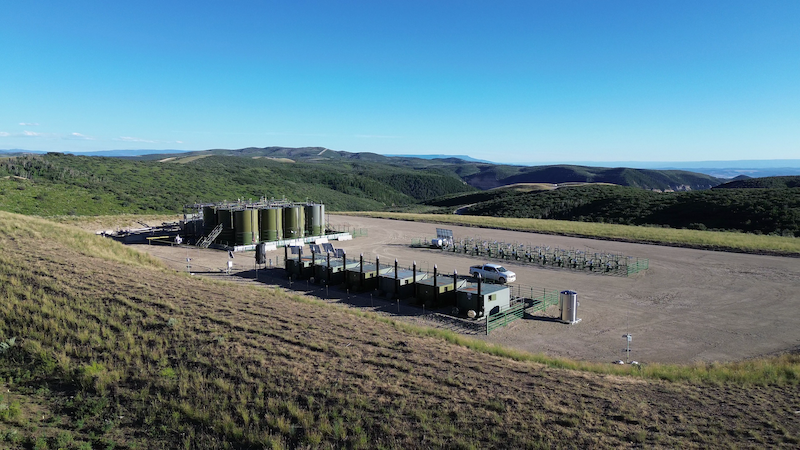
With liquid nitrogen systems, a cryogenic tank is placed at a facility and tied into pneumatic control loops with basic tubing (“plug-and-play”). The tank’s double-vessel vacuum technology allows it to store nitrogen in liquid form (-196c / -320°) for months at a time – all without the use of electricity or external power. Once filled, the tank releases prescribed volumes of liquid nitrogen at the exact pressures and temperatures needed to actuate the pneumatic devices at the facility, replacing methane as the source of instrument gas. As the tank gradually depletes over several weeks, Kathairos dispatches distribution trucks to refill the liquid nitrogen.
Nitrogen systems excel precisely because of their simplicity:
- No grid or power access is needed, only road access.
- No rotating parts, parts replacements or maintenance needs.
- Fast delivery timelines, easy install.
- No capex.
- No need to replace existing devices.
- No infrastructure build-out needed.
- Multiple tank sizes provide options for small and large sites alike.
Equipped with just a handful of regulators, the nitrogen system works as it should, every time. For nitrogen units to fail, the laws of thermodynamics would need to fail. For this reason, Kathairos has a recorded uptime of 99.985% across 48M+ operating hours and has been installed on dozens of sites to provide backup power to instrument air units. Even when compared to instrument (fuel) gas, nitrogen is the more reliable option: as an inert, 100% dry gas, nitrogen systems never encounter freeze-ups or condensate build-ups.
Finally, although nitrogen systems may be off-grid, they are always on-line. Telemetry systems transmit nitrogen levels and provide operators real-time visibility of their remote assets.
For many upstream and midstream oil and gas facilities, electrification simply isn’t a viable or cost-effective option. Luckily, electrification isn’t needed to abate methane and improve site performance. Nitrogen eliminates the need for on-site electricity by leaning into simplicity and harnessing the laws of thermodynamics, delivering clean, dry instrument (nitrogen) gas in the process.
Ready to eliminate methane venting without waiting on power access? Talk to our team about deploying nitrogen at your remote sites.
Related reading:
- New Mexico's Methane Regulations: What Operators Need to Know About Pneumatic Controller Requirements — New Mexico's pump rules split compliance paths based on grid access. See how power availability shapes the regulation and your conversion plan.
- Colorado Reg 7: What Operators Need to Know About the Pneumatic Phase-Out — Colorado's original pneumatic rules were built around grid power. Its 2025 phase-out drops that distinction entirely, requiring zero emissions statewide by 2029 — power access or not.
- How Routine Pneumatic Maintenance Can Accidentally Trigger EPA Subpart OOOOb — Federal OOOOb ties controller conversion timelines to power availability too. Learn how a single added controller can trigger sitewide compliance obligations, power access included.
- Cost of Venting Calculator — Run the numbers on what unabated pneumatic venting is costing your site today, and compare that against a nitrogen conversion with no power infrastructure required.
.png)