Kathairos has emerged as the leading North American solution for methane elimination from pneumatics, with more than 2,400 systems in operation across North America and over 70 major oil and gas producer partners.
In this post
Operators evaluating methane elimination technology hear the word "turnkey" constantly. Not all turnkey is created equal, and the difference shows up the moment a system hits the field — in whether it requires a service call, a spare parts inventory, or a maintenance tech on standby.
This guide breaks down what turnkey actually means for pneumatic methane elimination, what to ask any vendor before signing, and how to move a multi-site portfolio off gas-driven pneumatics without taking a single well offline.
At a Glance
What does a turnkey nitrogen deployment include?
A single vendor handles design, delivery, installation, and ongoing tank refills — the operator doesn't manage separate contracts for equipment, install labor, and consumable logistics. Systems tie into existing pneumatic lines without replacing controllers, pumps, or regulators.
How fast can a turnkey system be deployed at a well site?
Typical deployment is 8 weeks or less from order to field-ready, with no capital outlay required under the rental model. Installation itself is a two-hour tie-in, since it connects into existing infrastructure rather than replacing it.
What "Turnkey" Actually Means
In methane elimination, turnkey means an operator installs a system and never manages it again. No moving parts to service. No filters to change. No compressor package to monitor. No spare parts inventory to stock. The vendor owns performance, refill logistics, and uptime — the operator owns the outcome.
That's a meaningfully different proposition than the skid-based and self-managed alternatives operators are often comparing it against. Solar and battery-powered instrument air (IA) skids, generator-backed systems, and compressed air packages all require some combination of foundations, electrical infrastructure, moisture and filtration management, and an ongoing maintenance regime that someone on the operator's team has to own. Some alternatives require skid-mounted compressor systems, air dryers, filtration packages, and dedicated power generation, either tied to the grid or supported by combustion-based engines, solar arrays, and battery banks. At one site, that might be manageable. Across a portfolio, it becomes its own maintenance program.
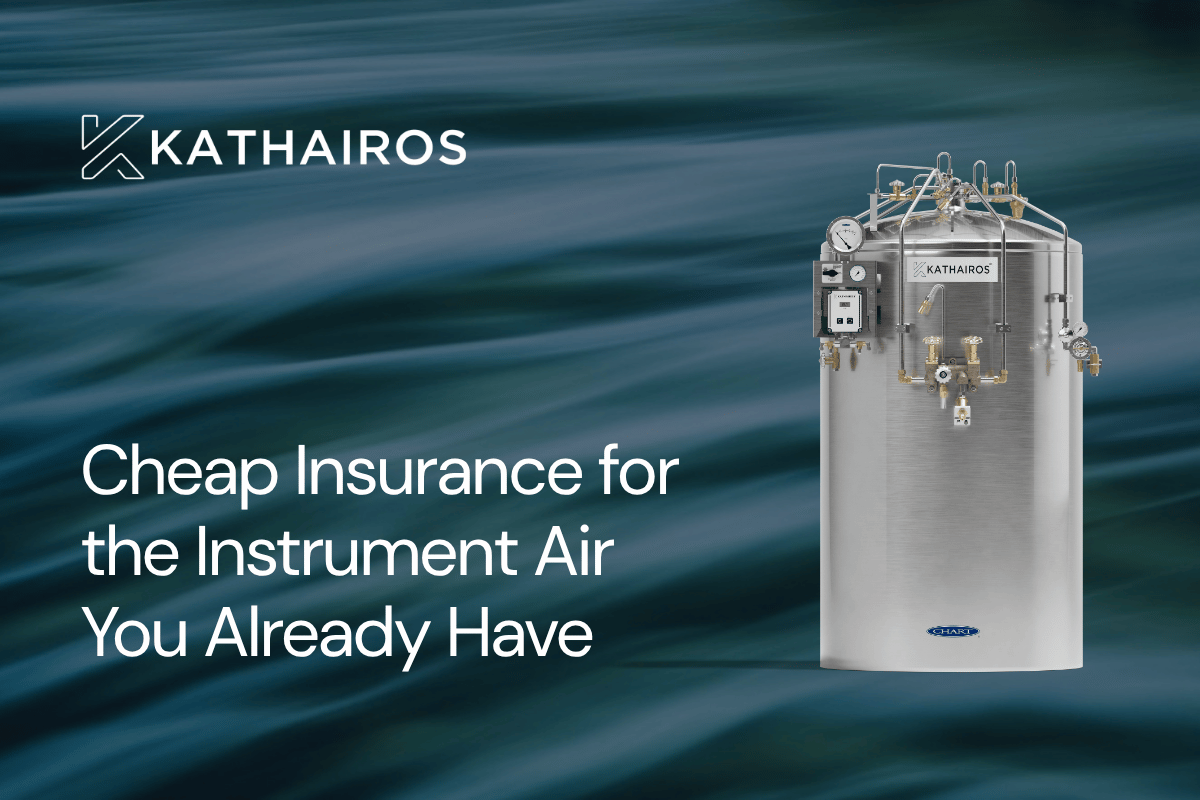
A turnkey nitrogen system replaces that entirely. The site footprint is a tank. A picker truck delivers the unit, and installation is a two-hour tie-in to existing pneumatic lines — no foundations, no enclosures, no electrical infrastructure, and no civil work beyond a rig mat, gravel, or concrete pad. That's the baseline definition operators should hold every vendor to before the word "turnkey" appears in a proposal.
Vendor Evaluation Checklist: What to Ask Before You Sign
Not every vendor pitching methane elimination is offering the same thing. Before signing, operators, ESG leads, and reliability engineers should get specific answers on five fronts:
- Proven track record. Ask for verifiable evidence of methane elimination — not reduction — under real field conditions. Case studies, third-party testing, and existing customer references should back every performance claim.
- Regulatory compliance support. Confirm the technology and its reporting tools keep pace with evolving requirements, including alignment with frameworks like OGMP 2.0, and that documentation is audit-ready without extra work on your end.
- Technology fit for your environment. Ask how the system performs off-grid, in your specific climate, and under your maintenance model. A system that works in a lab or a mild climate isn't the same as one field-validated through a prairie winter.
- Deployment speed and disruption. Ask how fast the system installs and what it takes away from ongoing operations while it does. A plug-and-play system should shorten downtime, not create a new project to manage.
- Cost structure and true ROI. Understand whether the model is rental, refill, or purchase, and what's actually included. Factor in avoided maintenance, avoided methane fees, and any offset value — not just the sticker price.
- Who owns maintenance. This is the question that separates turnkey from turnkey-in-name-only. If the answer involves your field team, a spare parts budget, or a service contract you have to manage, it isn't turnkey.
Phasing Out Gas-Driven Pneumatics Without Downtime
The operational objection to converting pneumatics is almost never "does it work" — it's "can we do this without shutting anything in." A well-run conversion should never cost an operator downtime, site disruption, delivery delays, added maintenance, parts replacement, operator involvement, or a new capital asset to depreciate. Here's how that plays out in the field at Kathairos:
- Site assessment and sizing. The vendor evaluates pneumatic demand at each site to determine correct tank size — this is engineering work the operator doesn't have to do.
- Delivery on a fixed timeline. Tanks are delivered by truck directly to site. In one documented case, a fleet of 60+ units was procured, delivered, and dispatched within a single week of the order being placed.
- Two-hour tie-in. Installation connects the nitrogen tank into existing pneumatic lines. The existing pneumatic devices stay in place — nothing is replaced.
- Sequenced changeovers across the portfolio. For multi-site campaigns, a dedicated crew works a fixed daily cadence — in one 9-week, 2,200-well campaign, installations scaled to 20–25 tanks per week without interrupting production.
- Commissioning and handoff to monitoring. Once tied in, the system is commissioned and handed to remote monitoring — no operator involvement required to keep it running.
- Ongoing refill and dispatch. From this point forward, the vendors dispatch team manages refills before a tank runs low. The operator's involvement ends at commissioning.
No foundations poured, no permitting tied to new power infrastructure, and no well shut-in required at any step.
Legacy Infrastructure Retrofit, No Capital Outlay
Legacy and brownfield sites carry a specific challenge: the pneumatic devices, tank batteries, and site infrastructure already exist and work. The economics only make sense if elimination doesn't mean ripping any of that out.
With Kathairos, a turnkey nitrogen system is deployed on a monthly rental model — zero upfront capital, just a predictable OPEX line that right-sizes your site's production and economics as they evolve. There's no asset to purchase, own, or depreciate, and no existing pneumatic devices to swap out. The retrofit is additive: the tank ties into what's already there. When total cost of ownership is calculated, factoring in avoided methane fees, reduced downtime, and potential offset revenue, the result is a net positive economic outcome — one that holds for the life of the site, without the operator carrying a depreciating asset on the balance sheet the entire time.
Logistics at Scale: Managing Nitrogen Across Regions and Basins
A turnkey promise only holds up if the supply chain behind it does. Running nitrogen reliably across a multi-basin portfolio means solving a logistics problem that looks different in every region an operator works — every basin, on time, using fit-for-purpose transports built for the terrain: navigating everything from long-haul prairie and Permian routes to Colorado's mountain grades and West Virginia's narrow, wooded access roads.
That fleet is backed by strategic field offices and dedicated field operators running meticulous monitoring on every tank in their assigned area, refilling before a site ever runs dry. Kathairos' North America-wide liquid nitrogen distribution network pairs extensive field personnel and vehicle fleet with a wide array of air separation units and local storage systems, and it's the reason the system performs the same in a Bakken January as it does on a summer day in the Permian. 46 million-plus operating hours at 99.994%-plus uptime isn't a lab result — it's what a dispatch network built for the field actually delivers.
Get to Turnkey
Turnkey methane elimination isn't a marketing term — it's a standard a vendor should be held to, from installation through the life of the site. If you're evaluating a conversion plan or want to see the economics for your own portfolio, visit our Economics and Applications pages, or reach out to start the conversation.
.png)